
The Unspoken Collector Rules: 7 Things Every Doll Collector Does but Rarely Admits
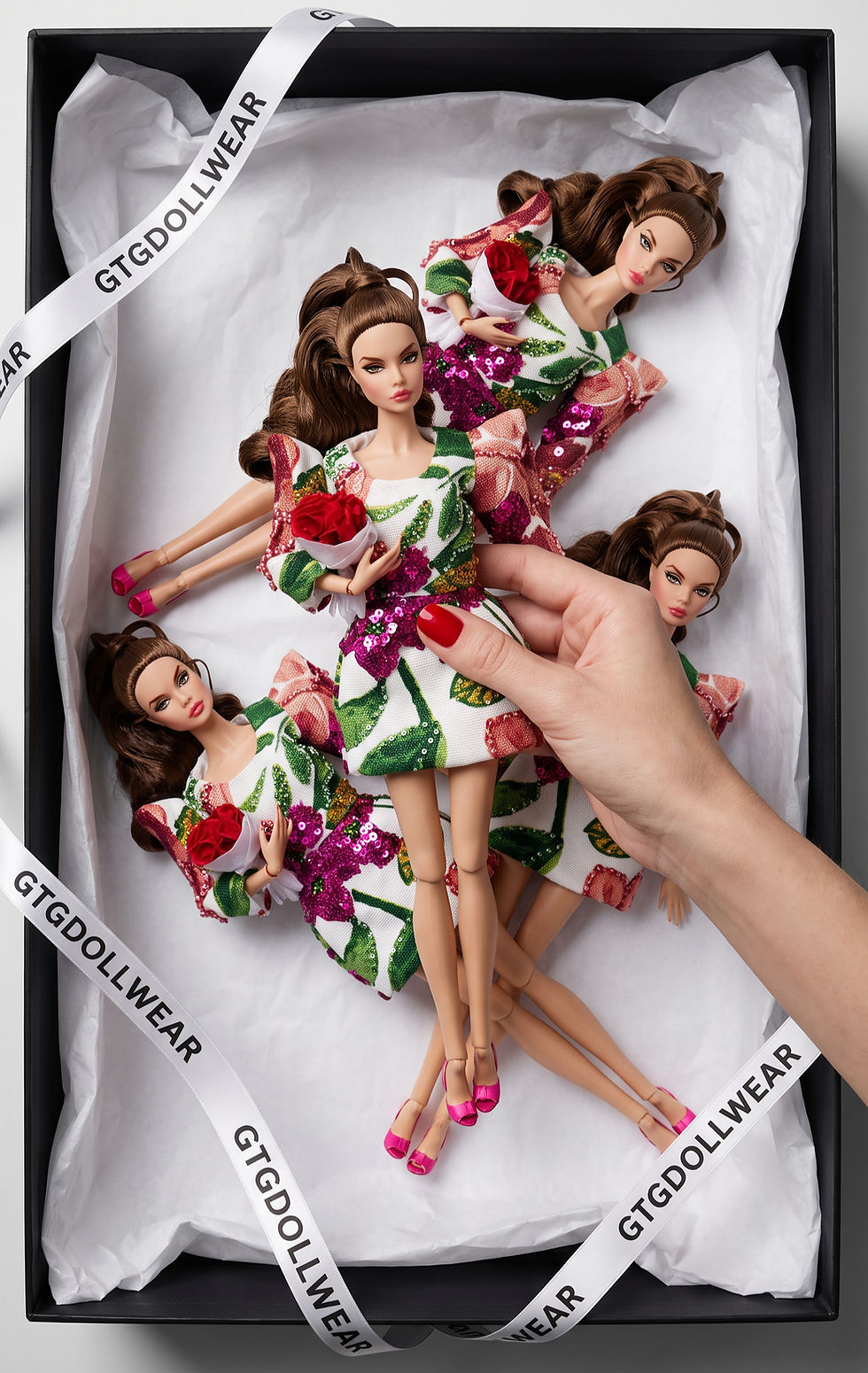
Every collector has a version of the same story. It begins with a doll they weren't planning to buy.
The intention was innocent enough: a quick scroll during a coffee break, a glance at a new release while waiting for dinner to cook. Five minutes, perhaps ten. Nothing serious.
And yet, somehow, by the end of the evening, they know the stock levels, the release date, the rooting pattern, the price history and the opinions of seventeen strangers on the internet.
Collecting has a way of transforming ordinary moments into tiny obsessions.
Most people assume doll collecting is about acquiring dolls. Spend enough time among collectors, however, and it becomes obvious that the dolls are only part of the story. The real story lives in the habits that form around them. It lives in the rituals that develop over years of collecting, the small behaviours so common they become almost invisible, and the private thoughts that collectors rarely confess but instantly recognise in one another.
One collector may fill their shelves with vintage Barbies, another may focus on modern fashion dolls, while someone else spends years hunting limited editions. Their budgets may differ, their aesthetics may differ, and their display styles may differ, yet somehow they find themselves repeating exactly the same behaviours.
The longer you collect, the more you realise there seems to be an unwritten rulebook that nobody was ever given yet everybody somehow follows. New collectors discover these habits and imagine they have invented them. Experienced collectors smile because they know they have done exactly the same thing for years. The details change, but the psychology remains remarkably consistent.
Perhaps this is because collecting sits in an unusual space between practicality and emotion. Unlike necessities, collections are built on desire. They are shaped by personal taste, imagination and aspiration. A collector is never simply buying an object. They are responding to a feeling, a story, a vision of what could be. That emotional layer creates behaviours that often make very little sense from the outside but feel entirely logical from within.
Some of these habits are amusing. Some are surprisingly revealing. A few expose things about our personalities that we might prefer to ignore. Together, however, they reveal something important. Collectors are not simply gathering dolls. They are engaging in a uniquely human process of dreaming, curating, imagining and creating meaning.
If you've ever spent an hour staring at a listing you had no intention of buying, rearranged an entire shelf to make room for a new arrival, or felt your heart rate increase during a limited release, then you already know this story. These are the unspoken doll collector rules. The ones we all follow. The ones we rarely admit.
The Cart Dance
Every collector knows the moment a doll enters the basket for the first time. It feels casual, almost meaningless. After all, placing a doll in a cart is not the same as purchasing her. It is merely creating an option, a possibility, a placeholder while you continue thinking.
At least, that's the story we tell ourselves.
The reality is often much more complicated. Once a doll enters the basket, she rarely leaves your thoughts. Suddenly she begins appearing in quiet moments throughout the day. You remember her while making a cup of tea. You think about her during your commute. You find yourself reopening photographs during television commercials. What appeared to be a simple shopping decision evolves into an ongoing conversation with yourself.
The doll is removed from the cart. Then added back again. The browser window is closed with dramatic determination. A few hours later it is reopened. New photographs are examined despite the fact that you've already seen every image available. Reviews are revisited and comparison videos are watched. Questions that have already been answered are asked once more.
To an outsider, this behaviour looks like indecision. To collectors, it feels more complicated than that. Most of the time, the issue is not whether the doll is wanted. The issue is whether wanting her is sufficient justification.
Collectors are often surprisingly uncomfortable with desire. We search for reasons that make our decisions appear practical. We compare prices, evaluate quality and calculate shelf space. We create logical frameworks around what is ultimately an emotional decision. The result is a strange dance between what we feel and what we can rationally defend.
Yet the most interesting aspect of the cart dance is not the hesitation itself. It is the anticipation it creates. The period before a doll arrives is often one of the most enjoyable parts of collecting. Ownership exists entirely in the imagination. The doll remains perfect because nothing has happened yet to complicate the fantasy. She has not arrived with unexpected flaws. She has not challenged your display space. She exists solely as potential.
During this stage, collectors become storytellers. They imagine future photographs, display arrangements, styling ideas and possible customisations. Entire narratives emerge before the doll has even been purchased. What appears, from the outside, to be excessive research is often an extension of that imaginative process.
Eventually the purchase is made. It almost always is. The order confirmation arrives and a different phase begins. Yet looking back, many collectors would admit that the cart dance itself provided a significant portion of the enjoyment. The anticipation, the imagining and the emotional tension become part of the experience.
Perhaps that is why we continue repeating this routine even after years of collecting. The cart dance allows us to savour possibility before it becomes reality. It transforms a simple purchase into something richer and far more personal. What looks like hesitation is often anticipation in disguise.
The Hair Test
Ask a non-collector what draws their attention first when looking at a doll and most will probably mention the face. It seems like the obvious answer. Facial screening defines expression, personality and character. Surely that is where the eye naturally goes first.
Yet speak to enough collectors and a different truth emerges. Before they have consciously processed the face, many have already examined something else entirely: the hair.

It happens almost instinctively. Rooting density is assessed, hairlines are examined, texture, fibre quality and styling potential are all quietly evaluated within seconds. What seems like an oddly specific habit is, in reality, one of the clearest signs of an experienced collector.
The reason runs deeper than aesthetics. Hair represents possibility.
A collector rarely sees a doll exactly as she appears in promotional photographs. Instead, they see future versions of her. They imagine alternate hairstyles, restyles, re-roots and transformations. They mentally remove factory styling and replace it with something entirely different. They envision who the doll might become rather than simply accepting who she currently is.
That ability to imagine alternatives lies at the heart of collecting itself. Collectors are rarely passive consumers. Even those who never customise a doll often engage in creative reinterpretation. They restyle outfits, redesign displays and create entirely new narratives. A doll becomes a starting point rather than a finished product. Hair sits at the centre of this process because it offers one of the most visible opportunities for transformation. A hairstyle can dramatically alter personality. It can shift aesthetics, influence photography and reshape how the doll is perceived. For many collectors, good hair creates opportunities that extend far beyond appearance.
This is why discussions about rooting quality can become surprisingly passionate. On the surface, it seems trivial. Beneath that conversation, however, lies a deeper appreciation for craftsmanship and potential. Collectors notice details because details influence possibilities.
The hair test also reveals something curious about how collectors see beauty. Most people evaluate an object based on what is immediately visible. Collectors often evaluate it based on what they believe it could become. They are constantly imagining futures that do not yet exist.
In many ways, this habit extends beyond collecting. It reflects a broader mindset. Collectors are frequently people who notice potential in things. They enjoy curating, shaping and developing ideas. Their collections become expressions of that creative impulse.
So when a collector examines the hair before anything else, they are not simply judging quality. They are assessing opportunity. They are looking for signs of possibility hidden beneath the surface.
The hair test is not really about hair at all. It is about imagination.
The Art of Justification
If anticipation is the emotional engine of collecting, then justification is the collector's preferred coping mechanism. Every hobby develops its own set of phrases, but few communities have elevated creative rationalisation to quite the same art form as collectors. Somewhere between discovering a doll and actually purchasing her, a fascinating mental process begins to unfold. What starts as simple attraction gradually acquires a supportive framework of logic. The doll is no longer merely beautiful. She becomes useful. She fills a gap in the collection. She contributes to a future project. She represents a unique opportunity that would be foolish to ignore. By the time the order confirmation arrives, a complete supporting argument has been assembled, carefully constructed around what was, at its core, a fairly simple feeling: you wanted her.

The interesting thing is that these explanations are rarely intended for other people. Popular stereotypes suggest collectors spend their lives defending purchases to confused friends, sceptical partners or family members who simply do not understand the hobby. While those conversations certainly exist, the more meaningful negotiation usually takes place in private. The collector is both lawyer and jury, presenting evidence to themselves in an attempt to reconcile desire with practicality. On one side sits the emotional response that made the doll unforgettable in the first place. On the other sits the responsible adult who vaguely remembers opening a banking app earlier that morning and feeling moderately concerned. What follows is a surprisingly sophisticated attempt to make both sides happy.
Few justifications are more familiar than the famous project argument. Collectors invoke projects with the confidence of people citing official government policy. The doll is needed for a future photoshoot, a character concept, a display idea or a customisation plan that exists somewhere between reality and imagination. To be fair, many of these projects are genuine. Creative hobbies naturally generate creative plans. Yet experienced collectors also recognise the timing of these revelations. It is remarkable how often a project suddenly emerges at precisely the moment a particularly beautiful doll appears for sale. The project may well become real. The doll may eventually inspire wonderful work. But there is usually a reason she arrived before the plan rather than after it.
What these explanations reveal is not dishonesty but discomfort. Modern life has a curious relationship with pleasure. People are encouraged to optimise, improve, monetise and justify almost every aspect of their existence. Hobbies become side businesses. Creative interests become personal brands. Leisure is expected to produce measurable outcomes. Within that environment, simply wanting something because it brings joy can feel strangely inadequate. Collectors are hardly immune to this pressure. We often feel more comfortable saying that a purchase is useful than admitting it made our heart skip a beat. Practicality sounds mature. Delight sounds indulgent. As a result, we become remarkably skilled at translating emotional decisions into rational language.
The irony is that when collectors look back on their favourite pieces years later, they rarely remember the arguments. Very few people stand in front of a display cabinet reminiscing about the financial logic behind a purchase. What lingers instead is the emotional memory. They remember seeing the doll for the first time. They remember the excitement of finally tracking her down. They remember opening the box, arranging the display, styling the hair and finding exactly the right place for her among the rest of the collection. The practical explanation that once felt essential gradually fades from memory because it was never the true source of attachment.
Perhaps this is ultimately why collector justifications are so fascinating. Beneath every explanation lies an attempt to grant ourselves permission. Permission to be inspired. Permission to appreciate beauty. Permission to care deeply about something that serves no practical purpose beyond making us happy. The stories we tell ourselves may be elaborate, amusing and occasionally quite impressive in their creativity, but they all point towards a much simpler truth. Most collectors do not buy dolls because they have successfully won an internal debate. They buy them because something about the doll refuses to leave their imagination. Everything else is merely supporting documentation.
The Silent Competition
Collectors rarely talk about comparison, not because it doesn't happen, but because it feels slightly impolite to admit. The collector community is built on shared enthusiasm, encouragement and admiration. We congratulate one another on new arrivals, exchange styling advice, celebrate successful restorations and cheer when somebody finally acquires a long-sought grail. From the outside, it would appear to be one of the least competitive hobbies imaginable. After all, there are no winners, no rankings and no official scorecards. Yet underneath that supportive atmosphere exists a quieter and far more complicated reality. Every collector, at some point, has looked at another collection and felt something stir.
The feeling rarely arrives as jealousy. In fact, it often arrives disguised as admiration. You're scrolling through photos before bed when a display stops you in your tracks. Perhaps it is a beautifully lit cabinet where every doll seems perfectly positioned. Perhaps it is a collector whose styling work appears effortlessly sophisticated. Perhaps it is someone who has mastered the art of photography so completely that their dolls seem less like collectibles and more like editorial fashion models captured in the pages of a luxury magazine. Whatever the trigger, a subtle shift occurs. You are no longer simply looking at their collection. You are measuring it against your own.
The comparison itself is fascinating because it is rarely about what outsiders assume. People unfamiliar with collecting often imagine collectors comparing collections based solely on value, rarity or size. Certainly those things can play a role, but they are almost never the entire story. Some of the most admired collections are not the largest. Some of the most influential collectors are not the ones with the rarest dolls. Collectors compare details. They compare styling choices, photography techniques, display aesthetics and the ability to create a cohesive visual world. One collector may own hundreds of dolls and secretly envy someone with twenty beautifully curated favourites. Another may possess every limited edition release imaginable while admiring a customiser who transforms ordinary dolls into something entirely unique.

What makes this comparison so persistent is that collections inevitably become extensions of identity. Over time, a collection stops being a random accumulation of dolls and begins telling a story about the person who built it. Every decision reflects taste. The dolls we buy, the ones we sell, the ones we display prominently and the ones we quietly store away all reveal something about what we find beautiful, meaningful or inspiring. Looking at another collector's display can therefore feel surprisingly personal. You are not simply observing their dolls. You are seeing someone else's aesthetic perspective made visible, and that naturally invites reflection on your own.
Social media has intensified this experience in ways previous generations of collectors never encountered. Years ago, most collections existed largely in private spaces. Today, collectors can browse beautifully photographed displays from around the world before breakfast. Every day presents new opportunities to admire, compare and occasionally question one's own choices. A collector who was perfectly satisfied with their display on Tuesday may discover a photograph on Wednesday that produces an overwhelming desire to reorganise an entire room. There is something almost comical about the speed with which contentment can evaporate after seeing someone else's impeccable lighting setup.
Anyone who claims they have never mentally rearranged their entire collection after scrolling through another collector's photographs is either extraordinarily evolved or telling a very creative story. Most collectors know exactly what it feels like to spend an evening admiring somebody else's display and then suddenly viewing their own shelves with the critical eye of a museum curator preparing for an important inspection. A cabinet that seemed charming yesterday now feels overcrowded. A display arrangement that once felt complete suddenly appears unfinished. The urge to improve can strike with remarkable force.
Yet comparison within collecting is rarely destructive because it exists alongside genuine appreciation. That is the part outsiders often struggle to understand. Collectors can feel inspired and intimidated at the same time. They can admire someone's work without resenting it. They can recognise another collection's strengths while remaining proud of their own. Unlike many forms of competition, the silent competition among collectors often leads to growth rather than rivalry. A collector sees a creative display solution and experiments with their own. Someone discovers a new photography technique and decides to learn it. An innovative customisation sparks ideas that lead to entirely new creative directions.
Perhaps that is because collectors are ultimately chasing something more abstract than ownership. The dolls themselves matter, of course, but the deeper pursuit often involves expression. Every collector is trying to build a world that reflects their own taste, creativity and imagination. Looking at another person's collection becomes interesting because it reveals a different interpretation of that same challenge. The comparison is not really about who has more. It is about how differently people can tell stories with the same medium.
There is also a wonderful irony at the centre of all this. The collector whose display you admire so intensely is almost certainly comparing themselves to someone else. The person whose photographs seem impossibly perfect probably notices flaws invisible to everyone around them. The collector with your dream cabinet may secretly wish they had more space. The person possessing your grail doll may be searching endlessly for one they cannot find. The comparison never ends because aspiration never ends. Every collector, no matter how accomplished, can usually find someone who appears to have mastered something they have not.
Perhaps that is why the silent competition remains exactly that: silent. Deep down, collectors understand that there is no finish line. No collection is ever completely finished, no display permanently perfected and no aesthetic journey truly complete. The pursuit itself is part of the pleasure. We compare because comparison helps us refine our vision. We admire because admiration inspires growth. And occasionally we spend an hour reorganising shelves after seeing someone else's photos because, despite all our lofty psychological insights, we are still collectors, and rearranging things in response to inspiration is practically one of our core personality traits.
What begins as comparison often ends as motivation. The collection that makes you question your own may also be the collection that encourages you to improve it. The styling that leaves you feeling inadequate may inspire your next creative breakthrough. In that sense, the silent competition isn't really competition at all. It is an ongoing conversation between collectors, carried out through displays, photographs and creative choices. Nobody says a word, yet everybody participates.
And if you've ever found yourself zooming into someone else's display photo to work out how they achieved a particular lighting setup while simultaneously insisting you're only there to admire the dolls, then congratulations. You are following another one of the hobby's most universal and rarely acknowledged rules.
The Drop Day Rush
There are few spectacles more entertaining than watching collectors in the hours leading up to a highly anticipated release. If you didn't know what was coming, you might assume everyone was perfectly calm. Conversations unfold at a leisurely pace. People casually discuss stock estimates, shipping options and promotional photographs. Some collectors even go so far as to declare that they are "still thinking about it," despite having spent the previous three weeks analysing every available image from every conceivable angle. The mood appears controlled, measured and entirely reasonable.
What makes this performance so charming is that everybody involved understands exactly how temporary it is.
The transformation usually begins around fifteen minutes before launch. A subtle shift takes place. The collector who was calmly drinking coffee suddenly checks the time three times within the same minute. Browser tabs begin multiplying. Login details are verified. Payment information is reviewed with the seriousness of someone conducting a pre-flight safety inspection. Phones, tablets and laptops mysteriously appear side by side as though preparing for a coordinated military operation. Nobody explicitly announces that panic is setting in, yet everyone recognises the symptoms.
The contrast with the Cart Dance is particularly fascinating. Under normal circumstances, collectors can spend days, sometimes weeks, deliberating over a purchase. They compare reviews, evaluate photographs and conduct enough research to qualify for an honorary degree in consumer behaviour. Release day eliminates that luxury entirely. The same person who required fourteen days to decide whether they liked a doll suddenly finds themselves making a checkout decision in under twenty seconds. It is one of the great contradictions of collecting. When time is plentiful, we analyse. When scarcity appears, instinct takes over.
Scarcity has always possessed a remarkable ability to alter human behaviour. The possibility that something may disappear changes the emotional equation almost immediately. A doll that seemed mildly interesting yesterday can become surprisingly desirable the moment collectors hear the words "limited edition" or "low stock." This does not necessarily mean people are being irrational. In many cases, past experience has taught them a painful lesson. Most collectors have a story about the doll they hesitated on. The one that sold out before payday. The one they planned to buy next week. The one that later appeared on the secondary market at a price so alarming it became the subject of group discussions.
These experiences leave their mark. They create a collective memory that quietly influences future behaviour. When release day arrives, collectors are not responding solely to the doll in front of them. They are also responding to every previous missed opportunity. Somewhere in the back of their mind, a ghostly chorus of former regrets begins whispering, "Remember what happened last time."
What makes release days particularly interesting is that they transform a largely solitary hobby into a communal event. Most collecting takes place privately. People browse alone, organise displays alone and often make purchasing decisions alone. Drop days feel different because thousands of people are experiencing the same thing simultaneously. Comment sections become surprisingly lively. Group chats spring into action. Collectors scattered across different countries find themselves united by a common purpose and a shared countdown clock.
The atmosphere resembles a strange combination of celebration and emergency response. One person announces they successfully checked out. Another reports website issues. Someone is frantically refreshing pages while insisting they remain perfectly calm, despite evidence to the contrary. Meanwhile, collectors who claimed they were only "considering" the doll reveal an astonishing level of preparedness that strongly suggests consideration ended some time ago.
The humour of these situations comes from how dramatically collector behaviour changes under pressure. Ordinarily thoughtful people become surprisingly competitive with loading speeds. Adults who navigate careers, mortgages and complex life responsibilities can suddenly find themselves emotionally invested in whether a website refreshes two seconds faster than it did previously. Perfectly reasonable individuals begin offering updates such as "She's in my basket but I don't trust it," a sentence that sounds entirely absurd outside collector circles yet makes complete sense within them.
And then, just as suddenly as it begins, the rush is over.
Successful collectors receive the blessed order confirmation email and experience an immediate wave of relief. Those who miss out enter a period of mourning that is usually accompanied by statements beginning with "It's fine" and ending with very convincing explanations about why they never really wanted the doll anyway. Both reactions are part of the tradition. Both are entirely understandable.
What lingers afterwards is often more memorable than the purchase itself. Years later, collectors may struggle to remember exactly what they paid for a particular doll, but they can often recall the circumstances of acquisition with remarkable clarity. They remember where they were sitting when the release went live. They remember the frantic refreshes. They remember the checkout panic. They remember the moment confirmation finally appeared on screen. The story becomes attached to the doll itself, transforming an object into a memory.
Perhaps that is the real reason release days matter so much. They create experiences rather than transactions. Collectors are not simply acquiring a doll. They are participating in an event. The excitement, anticipation and shared emotional energy become part of the object's history within the collection. Long after the initial novelty fades, the story remains.
For all the discussion surrounding scarcity, stock levels and sell-outs, the Drop Day Rush ultimately reveals something rather lovely about collectors. It demonstrates how deeply people can care about something that brings them joy. In a world that often encourages detachment and practicality, there is something refreshing about watching adults become genuinely excited over a hobby they love. The frantic clicking, the nervous anticipation and the celebratory messages afterwards may appear ridiculous to outsiders, but perhaps that is part of their charm.
After all, nobody refreshes a webpage fifty-seven times in ten minutes unless they are hoping for a little bit of happiness on the other side. And if that isn't a perfectly human thing to do, it's difficult to imagine what is.
The Shelf Space Lie
Of all the collector traditions, none is performed with greater confidence or consistency than the declaration that there is absolutely no room left. It is a statement delivered so frequently and with such conviction that one might reasonably assume it represents a genuine obstacle. Shelves are full. Cabinets are overflowing. Display surfaces have reached their natural limits. The collection, everyone agrees, has finally achieved maximum capacity.
And yet, somehow, another doll always finds her way in.
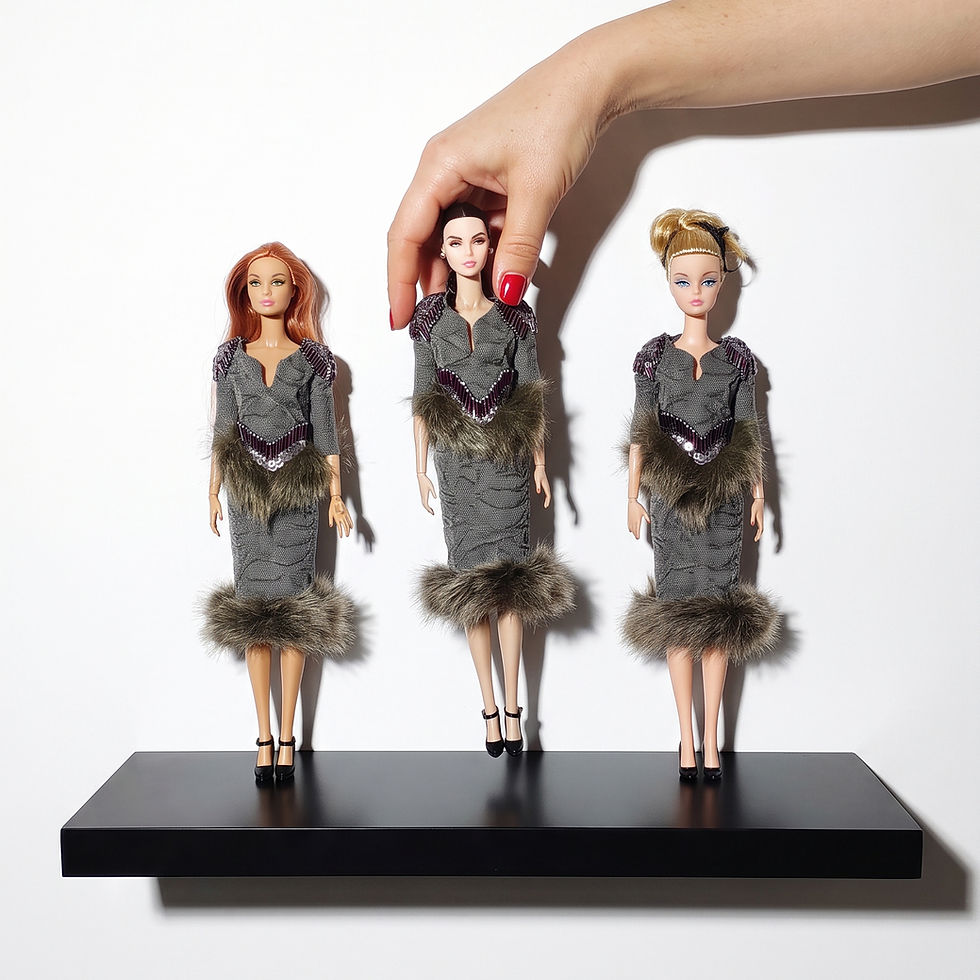
The Shelf Space Lie is not really a lie in the malicious sense. Most collectors genuinely believe it when they say it. They stand in front of packed displays, survey every available surface and arrive at what appears to be an entirely rational conclusion. There is nowhere for another doll to go. The problem is that collectors have a long history of underestimating their own ingenuity. What appears impossible on Monday has often been solved by Thursday through a combination of rearrangement, creativity and an astonishing willingness to spend two hours moving objects three centimetres to the left.
The process usually begins with resistance. A new doll appears and immediately encounters practical concerns. There simply isn't room. Logic is consulted. Measurements are taken. Existing displays are evaluated. The responsible adult inside every collector nods approvingly and points towards the obvious conclusion. Acquisition is impossible because reality has imposed a physical limit. For a brief moment, reality appears to be winning.
The trouble is that the collector imagination rarely accepts defeat for very long.
A few days later, entirely innocent activities begin taking place. A shelf is adjusted, supposedly for unrelated reasons. A display is reorganised. Two dolls are moved closer together. A cabinet receives what can only be described as a strategic review. Before long, the collector has entered a phase that would look suspiciously familiar to anyone who has ever watched a city planner attempting to increase housing capacity within an overcrowded district.
What follows is one of the most remarkable transformations in the hobby. Space, which previously appeared fixed and immovable, suddenly reveals itself to be surprisingly flexible. Items are rotated. Displays are edited. Furniture is reassessed. Entire visual concepts are reconsidered. A collector who spent weeks insisting no room existed discovers possibilities that had apparently been invisible all along. The new doll arrives and, in an outcome that surprises nobody except perhaps the collector themselves, a perfect spot somehow materialises.
The humour lies in how predictable this cycle has become. Experienced collectors can often recognise the outcome before the process even begins. When someone announces that they have no space left, fellow collectors rarely interpret this as a final verdict. Instead, it is understood as the opening chapter of a story whose ending has already been written. Everyone knows that shelf space, like budgets and wish lists, behaves differently within collecting than it does elsewhere in life.
What makes this particular habit interesting is that it reveals something deeper than organisational skills. At its core, the Shelf Space Lie is really about attachment. Physical space represents one of the few genuinely unavoidable limitations collectors encounter. Wish lists can expand indefinitely. Dreams can expand indefinitely. Imagination certainly expands indefinitely. Shelves, unfortunately, tend to occupy a fixed amount of square footage. Eventually every collector reaches a point where enthusiasm collides with reality.
The response to that collision reveals how people prioritise the things they love.
Most collections are not static. They evolve because the people building them evolve. Tastes change. Interests develop. New aesthetics emerge. The display that felt complete two years ago may no longer reflect the collector who stands in front of it today. Rearranging shelves is therefore about more than simply finding room for an additional doll. It becomes an act of re-curation. The collection is edited, refined and reshaped into something that better represents its owner.
In this sense, making space becomes a creative exercise rather than a logistical problem. Collectors are not merely fitting another object into an already crowded room. They are reconsidering how each piece contributes to the overall story. Which dolls deserve greater visibility? Which displays no longer feel relevant? Which themes have become more important over time? These questions transform what could be a practical headache into an opportunity for reflection.
There is also something unexpectedly optimistic about the entire process. The Shelf Space Lie rests upon the assumption that today's limitations are permanent, but collectors repeatedly prove otherwise. A solution emerges because they care enough to find one. They adapt. They rethink. They rearrange. Time and again they demonstrate a remarkable ability to create room for things that matter to them.
Seen from that perspective, the phenomenon extends well beyond collecting. People do this throughout their lives. We make room for new friendships, new interests, new experiences and new priorities. We adjust existing structures to accommodate things that feel meaningful. Collectors simply provide a highly visible version of that universal human habit, complete with display cabinets and occasional furniture rearrangements.
Perhaps that is why the Shelf Space Lie remains such an enduring part of collector culture. It captures the tension between practicality and affection that defines so much of the hobby. The shelves are genuinely full. The limitations are genuinely real. Yet so too is the desire to welcome something new into a carefully built world.
And if, after declaring for the fifth time this year that your collection has reached absolute maximum capacity, you somehow discover enough room for one more doll, don't be too hard on yourself. The rest of the collector community abandoned the laws of spatial logic a long time ago. We are all standing in front of supposedly full shelves, making tiny adjustments and quietly proving that the concept of "no space left" has always been more of a suggestion than a fact.
Collector Guilt
There comes a moment in almost every collector's journey when excitement and guilt arrive in the same box.
The excitement is easy to recognise. It appears the second a long-awaited parcel lands on the doorstep. It follows you into the room while you carefully cut through tape and protective packaging. It sits beside you as layers of tissue paper are unfolded and a doll you've been thinking about for weeks, months or even years finally appears in front of you. For a brief period, there is only satisfaction. The hunt is over. The waiting is over. The imagined version of the doll has finally become real.
Then, quite unexpectedly, another feeling slips into the room.

A small voice begins asking questions:
Did I really need her?
Was that sensible?
Should I have waited?
What am I going to do with all of these dolls?
The voice rarely stays for long, but most collectors know it well. It tends to appear immediately after a purchase, particularly a significant one. The larger the excitement, the more likely guilt is to follow close behind, as though some invisible law of emotional physics requires every burst of joy to be balanced by a moment of self-interrogation.
What makes collector guilt interesting is that it exists even when there is absolutely nothing wrong.
This happens because collecting occupies an unusual place in adult life. Society generally understands spending money on practical things. New furniture is sensible. Home improvements are sensible. Professional development is sensible. People rarely feel the need to justify replacing a washing machine or purchasing a laptop for work. Joy, however, exists in a stranger category.
People are often encouraged to explain why pleasure is useful before they are allowed to fully enjoy it. The result is that many collectors find themselves instinctively questioning purchases that brought them genuine happiness. We have become so accustomed to evaluating everything through the lens of productivity and necessity that simple delight can feel surprisingly difficult to accept without conditions.
It is one of the great contradictions of collecting.
Collectors spend weeks longing for a doll. They imagine her arriving. They search for her. They save for her. They celebrate finding her. Then, within hours of achieving exactly what they wanted, they begin questioning whether wanting it was reasonable in the first place.
The irony becomes even more obvious when viewed from a distance.
Nobody looks at a collector's shelves and sees a catalogue of financial decisions.
They see memories.
Collectors often underestimate how much emotional history exists inside their displays. Every shelf contains stories. There is the doll found unexpectedly while travelling. The one purchased during a difficult period and forever associated with overcoming it. The grail that took years to locate. The gift from a friend who understood the hobby enough to know exactly what would make somebody's day.
Years later, collectors rarely remember what their bank balance looked like on the day they purchased those dolls. They remember how the dolls made them feel.
This is perhaps why guilt tends to fade while affection remains. The emotional value of a collection reveals itself slowly over time. A doll that seemed like an indulgence in the moment often becomes part of a larger personal story. She earns her place not through rarity or resale value but through association, memory and attachment.
There is also a fascinating double standard at play. Collectors are often incredibly compassionate towards one another. When another collector shares an exciting new arrival, the response is rarely criticism. People celebrate. They compliment. They encourage. They understand the happiness that comes from finding something special.
Yet many collectors struggle to extend that same generosity to themselves.
The purchase that would seem completely reasonable if made by a friend suddenly feels questionable when it is their own. The excitement they would enthusiastically support in someone else becomes something they analyse and scrutinise when experiencing it personally.
Because when you strip away the spreadsheets, the budgets, the shelf-space calculations and the careful reasoning, collecting remains what it has always been: a hobby built around affection. People collect things because those things mean something to them. The meaning may be nostalgia, artistry, creativity, comfort or inspiration, but it matters nonetheless.
The odd thing about collector guilt is that most collectors never learn this lesson from themselves.
They learn it from looking at older parts of their collection.
A doll purchased five years ago rarely inspires guilt. Instead, she feels familiar, beloved and integrated into the story of the collection. The anxiety surrounding the purchase disappears so completely that it becomes difficult to remember why it existed in the first place.
That perspective changes everything. The doll creating guilt today may very well become the doll you can't imagine parting with tomorrow. Perhaps that is why collector guilt remains one of the hobby's most universal experiences. It appears whenever people care deeply about something that brings them happiness. It emerges from the tension between practicality and passion, responsibility and desire. Yet it almost never survives as long as the affection that caused it.
If the Cart Dance is about anticipation, then collector guilt is what happens after anticipation finally gets its wish.
And if history is any guide, the guilt will fade long before the love does.
A Final Thought
If you've recognised yourself in more than one of these collector rules, congratulations. You're officially one of us. The truth is whether you're just starting your collecting journey or you've been rearranging shelves for years, there's always something new to learn, discover and enjoy.
If you'd like to dive deeper into the world of doll collecting, from buying smarter and styling dolls to understanding collector psychology, display design and photography, we'd love to have you join our online programme. It's a space for collectors who want more than just a collection. They want inspiration, knowledge and a community of people who understand exactly why a doll can sit in a shopping cart for three weeks and still somehow end up coming home.
After all, collecting isn't only about what sits on your shelves. It's about what you learn through the process of building something you truly love. ♥️



Comments