
Silkstone Barbie: A Deep Look at the Fashion Model Collection and Why It Still Captivates Collectors

There’s something about a Silkstone Barbie that makes you slow down for a second. You pick her up and she has weight — real weight — the kind that settles into your palm like she’s carrying her own quiet story. If you’ve ever held one, you know the feeling. That tiny gasp. That little “oh.” It’s almost funny how a doll can do that to a grown woman, but it happens every time.
Silkstones don’t feel like toys. They feel like women who’ve lived a little, who’ve seen a few things, who’ve held themselves together on days when it would’ve been easier to fall apart. There’s a calmness in their faces, a stillness that doesn’t rush you. You look at her and something inside you softens, even if you didn’t realise you were tense.
Collectors understand this without needing to explain it. We’re adults with full lives and complicated hearts, and somehow these dolls meet us right where we are. Maybe it’s the craftsmanship. Maybe it’s the nostalgia. Maybe it’s the way she stands there like she knows exactly who she is. Whatever it is, it reaches you in a place that doesn’t get touched often.
Silkstones carry a kind of elegance that doesn’t need to perform. They remind you of a time when beauty had intention, when clothes were made with care, when femininity had a quiet strength to it. And when you hold her, even for a moment, you feel a little more connected to that softness in yourself — the part that still believes in grace, in detail, in the small things that make life feel lovely.
She isn’t just a doll. She’s a pause you didn’t know you needed.
The History of Silkstone Barbie

The story of Silkstone Barbie begins in the early 2000s, when the world felt loud and fast and a little too disposable. Mattel could’ve kept chasing trends, but instead they reached for something slower, something rooted in the elegance of earlier decades. And then Robert Best stepped in with his sketchbook, and suddenly the Fashion Model Collection had a heartbeat.
Silkstone wasn’t created to be flashy. It was created to feel substantial — cool to the touch, heavier than you expect, almost like a keepsake someone would wrap in tissue and tuck away safely. The material was engineered to mimic porcelain without the fragility, giving the dolls a presence that surprises you the first time you hold one. That weight tells you everything. It’s a small reminder that beauty can be solid, intentional, crafted.
Robert Best designed with a kind of reverence. He wasn’t trying to reinvent Barbie; he was honouring her. He brought back the silhouettes that shaped entire eras — the fitted bodices, the gloves, the gowns that moved like they had their own quiet opinions. Collectors felt that respect immediately. It wasn’t nostalgia for the sake of nostalgia. It was a return to a kind of femininity that held its own.
The early Silkstones didn’t arrive with fanfare. They slipped into the world with the confidence of something that didn’t need to shout. And maybe that’s why they stayed. They offered a kind of beauty that felt steady, almost grounding. A reminder that elegance can still exist in a world that forgets it sometimes.
The Fashion Eras They Celebrate

One of the most beautiful things about Silkstone Barbie is the way she carries entire fashion eras inside her tiny frame. You look at her and you’re not just seeing a doll — you’re seeing a memory of a woman who might have lived in that decade, breathed its air, walked its streets, and worn its clothes with intention. The Fashion Model Collection wasn’t just about outfits; it was about capturing the spirit of a time, and the dolls themselves became little vessels of history.
The 1950s‑inspired Silkstones always feel like stepping into a room where everything is calm and structured. Lingerie Barbie #1 set the tone — that soft face, the delicate underpinnings, the sense that she was preparing for a day that mattered. Then came The Debut, with her black gown and white opera gloves, a doll that feels like she’s about to glide into a gala where everyone already knows her name. Evening Gown carries that same energy — the kind of elegance that doesn’t need to be explained. These dolls remind you of a decade where women dressed with a kind of quiet discipline, where tailoring was a language, and where beauty had a steadiness to it. You can almost imagine the rustle of taffeta, the soft click of heels on polished floors.
Then the mood shifts as you move into the 1960s pieces, and suddenly everything feels brighter, lighter, a little more daring. Delphine with her icy blue gown and sculpted hair looks like she stepped out of a Paris salon. Ingenue brings that sweet, youthful charm — the kind of girl who would twirl just because the dress allowed it. The Interview is sharper, more modern, a woman who knows exactly what she wants and dresses accordingly. And Preferably Pink — she’s pure joy. These dolls carry the spirit of a decade that wasn’t afraid of colour or confidence. They feel like women who would laugh loudly, dance freely, and take up space without apologising.
And then there are the old‑Hollywood gowns, the ones that make you pause because they carry that cinematic glow. Gala Gown is a masterpiece — the kind of doll that makes you straighten your posture just by looking at her. The Siren feels like she’s about to step onto a stage where the lights are warm and the audience is holding its breath. Evening Splendor brings that golden, nostalgic glamour, the kind that makes you think of vintage perfume bottles and velvet curtains. The Showgirl is pure spectacle — feathers, sparkle, drama — but still refined in that Silkstone way.
What makes these eras so special is how they’re held in the dolls themselves. The clothes aren’t just outfits; they’re stories. The silhouettes aren’t just shapes; they’re memories. Silkstones let you hold a piece of fashion history in your hands, and somehow it feels personal — like you’re touching a world you weren’t alive to see, but still recognise in your bones.
Designers Behind the Magic
When you talk about Silkstone Barbie, you eventually end up talking about Robert Best — not because he demanded the spotlight, but because his work quietly earned it. There’s a steadiness in his designs, a kind of respect for Barbie’s history that you can feel even if you’re not the type to analyse fashion sketches. He understood her. He understood the women who loved her. And he understood the power of a silhouette that doesn’t need to shout to be unforgettable.
Robert Best came to the Fashion Model Collection with a background in real‑world fashion design, and you can see that training in every seam. The early dolls — Lingerie Barbie #1, Delphine, The Debut — carry that unmistakable “fashion house” energy. They look like they stepped out of a couture atelier where someone spent hours perfecting the drape of a skirt or the angle of a collar. There’s intention in the way the clothes sit on the body, the way the fabrics fall, the way the colours are chosen. Nothing feels rushed. Nothing feels like an afterthought.
What makes his work special is the way he blended nostalgia with modernity. He didn’t try to recreate the past stitch for stitch. He translated it. He softened it. He made it wearable in miniature without losing the essence of the era. Dolls like The Interview and Preferably Pink show that balance — they nod to the sixties, but they still feel fresh, like women you could imagine walking through a city today with that same confident sway.

Then there are the dramatic pieces — the ones collectors still whisper about. Gala Gown, The Siren, The Showgirl. These dolls feel like he let himself dream a little bigger. You can almost imagine him sketching late at night, letting the lines get bolder, letting the fabrics get richer, letting the fantasy take over. They’re theatrical without being gaudy, glamorous without losing that Silkstone restraint. It’s a delicate line to walk, and he walked it beautifully.
Even the simpler dolls — Evening Splendor, Ingenue, The Secretary — carry his signature. There’s always a sense of story. A woman with a life. A moment captured. A feeling held still. That’s the part collectors respond to, even if they don’t say it out loud. These dolls feel like characters, not mannequins. They feel like women who have somewhere to go, something to say, someone waiting for them.
Robert Best didn’t just design clothes for dolls. He created a world — one stitched together with elegance, memory, and a kind of quiet confidence that feels rare now. And even though the Fashion Model Collection has ended, his work still sits on our shelves, reminding us that beauty made with intention doesn’t fade. It lingers. It stays. It becomes part of us.
The Craftsmanship
The first time you hold a Silkstone, you realise she isn’t pretending to be anything. She’s not trying to feel expensive — she simply is. The weight hits you before the details do, that cool heaviness settling into your palm like she’s made of something that remembers the past. It’s almost startling, the way a doll can feel this substantial. You lift her, and for a moment you forget she’s only eleven and a half inches tall. She carries herself like a woman who knows the value of being built well.

The Silkstone material itself was engineered to mimic porcelain without the fragility, and you can feel that intention in every curve. There’s a smoothness to her surface that catches the light in a way vinyl never could. It’s not shiny. It’s not matte. It’s something in between — a finish that feels like it belongs in a glass cabinet, but still warm enough to hold. Collectors talk about it all the time, that strange mix of delicacy and strength. She looks breakable, but she isn’t. She looks soft, but she’s solid. It’s a balance that feels almost poetic.
Then you start noticing the details. The tiny darts in the bodices. The real metal zippers on early releases. The immaculately painted face that give her that serene, almost knowing expression. The stitching is so precise it makes you wonder how many times someone had to breathe in and steady their hands to get it right. Even the shoes — those impossibly small heels — feel like they were made by someone who cared about the arch of a foot no one would ever see up close.
The Fashion Model Collection wasn’t mass‑produced in the way playline dolls are. These pieces were assembled with a level of attention that borders on devotion. You see it in dolls like Gala Gown, where the beading sits perfectly symmetrical, or Delphine, whose pale blue dress drapes like real silk even though it’s scaled down to a fraction of its size. You see it in The Debut, where the gloves slide on with that satisfying resistance, like they were tailored for her alone.
Even the packaging had a kind of reverence to it. The boxes opened like keepsake drawers, lined with tissue paper that whispered when you unfolded it. Ribbons held the dolls in place, not plastic ties. It felt like unwrapping a gift someone chose carefully, not something that came off a conveyor belt.
What makes the craftsmanship so special is the way it invites you to slow down. You can’t rush a Silkstone. You find yourself turning her gently, studying the seams, admiring the way her hair is set. It becomes a small ritual — a moment of stillness in a world that rarely offers any.
Silkstones remind you that beauty made with intention feels different. It lingers. It stays with you long after you’ve put her back on the shelf.
Iconic Releases
Every Silkstone collector has that one doll who lives rent‑free in their mind — the one they still think about when they’re reorganising shelves or pretending they’re “just browsing” eBay at midnight. The Fashion Model Collection gave us so many of those unforgettable moments, the kind that make you stop mid‑scroll and whisper, “Oh… her.”
For many collectors, Maria Therese was that moment. She arrived in her pale bridal gown, serene and luminous, like she was carrying a whole story in her eyes. There’s something almost cinematic about her — the veil, the bouquet, the softness of her face. She feels like a woman standing at the edge of a new chapter, steady and hopeful. She wasn’t just a doll; she was a feeling.
Then there’s Lisette, the elegant raven‑haired beauty who looks like she stepped out of a Parisian café in the 1950s. Her black cocktail dress, her red lips, the way she holds her handbag — she has that effortless sophistication that makes you want to sit up straighter. She’s the kind of doll who doesn’t need sparkle to be unforgettable. She carries her own glow.
Toujours Couture is another one collectors still talk about. That dramatic black gown with the sweeping train, the sculpted hair, the attitude — she feels like the finale look in a runway show where the audience holds its breath. There’s a confidence to her that borders on regal, but she never feels cold. She feels like a woman who knows exactly who she is.
And then we have High Tea and Savories, a doll who brings a completely different kind of charm. She’s soft, pastel, delicate — like a spring afternoon captured in miniature. Her hat, her gloves, the tiny floral details… she feels like a memory of gentler days. Collectors adore her because she’s sweet without being saccharine, refined without being stiff.
The Artist is one of the most interesting Silkstones ever released. She stands there in her painter’s smock, palette in hand, looking like she’s about to step into her studio and lose herself in colour for hours. She’s creative, expressive, a little messy in the most beautiful way. She reminds collectors that femininity isn’t just gowns and gloves — it’s imagination, too.
And of course, The Stewardess, a fan favourite for good reason. She carries that mid‑century travel glamour — the crisp uniform, the tiny hat, the sense of adventure. She feels like she’s about to board a plane headed somewhere warm and exciting. There’s nostalgia in her, but also movement. She’s going places.
What makes these releases iconic isn’t just their rarity or their resale value. It’s the way they captured a moment — a mood, a woman, a world. Each one feels like a character you could write a novel about. They weren’t just dolls; they were stories you could hold.
Styling and Display

Styling a Silkstone is its own kind of therapy. You pick her up and suddenly you’re adjusting a hem, smoothing a curl, tilting her chin just a touch — and before you know it, twenty minutes have passed and you’re calmer than you were when you started. These dolls invite you into that slow, intentional space. They don’t rush you. They don’t fight you. They let you create a moment.
Some collectors love the drama of dolls like Fiorella, with her floral couture and sculpted hair. She’s the kind of Silkstone who doesn’t need much — a soft spotlight, a clean background, and she becomes the centre of the room. Her colours do the talking. Her silhouette carries the rest. She’s perfect for collectors who like their displays to feel like a quiet fashion exhibition.
Then there are dolls like Barbie as Grace Kelly in The Bride, who bring a completely different energy. She’s delicate, serene, almost ethereal. When you style her, you find yourself being gentler without even thinking about it. A lace backdrop, a soft ribbon, maybe a vintage perfume bottle beside her — suddenly she looks like she stepped out of a memory. She’s the kind of doll who makes you want to whisper.
The Shopgirl is another favourite for styling because she feels so grounded. Her outfit is simple, but the details are sharp — the little hat, the structured jacket, the handbag that sits just right in her hand. She looks incredible in everyday settings: a bookshelf, a vanity tray, a stack of fashion books. She blends into real life in a way that feels intimate, almost personal.
And then you have dolls like Barbie in The French Maid, who bring a playful spark to any display. She’s cheeky without being cheap, elegant without being stiff. A tiny feather duster, a miniature silver tray, a little velvet chair — suddenly she becomes a character. Styling her feels like telling a story, and collectors love that.
When it comes to posing, Silkstones reward patience. Their bodies have a weight that makes every adjustment feel deliberate. A slight turn of the wrist can change her entire mood. A tilt of the head can soften her expression. You start to understand why photographers love them — they hold a pose like they’re listening.
Display is where your personality comes in. Some collectors prefer glass cabinets with perfect lighting. Others scatter their dolls around the house like little muses. A Silkstone on a bedside table feels different from one on a bookshelf. She changes the energy of the room. She becomes part of your space, not just something you own.
And the truth is, styling and displaying these dolls isn’t about perfection. It’s about connection. It’s about creating a moment that feels good to look at. A moment that slows you down. A moment that reminds you beauty doesn’t have to be loud to matter.
Why Collectors Still Love Them
There’s a reason Silkstone collectors never really “move on.” Even when new lines come out, even when trends shift, even when life gets busy and shelves get crowded, there’s something about these dolls that keeps pulling us back. It’s not dramatic or loud — it’s a quiet tug, the kind you feel in your chest when you walk past your display and catch the eye of a doll like Barbie in The Nurse or The Artist’s Model. They sit there with that calm, steady presence, and suddenly you remember why you fell in love with them in the first place.

Part of it is the weight. Collectors don’t talk about this enough, but the physicality of a Silkstone does something to you. When you lift a doll like The Redhead, with her fiery curls and tailored suit, you feel that cool heaviness settle into your palm. It’s grounding. It makes you slow down. It reminds you that beauty can be solid, not flimsy. That craftsmanship can still matter in a world that rushes everything.
Another part is the storytelling. Silkstones don’t just stand there; they suggest things. A doll like The French Lady feels like she has a whole life outside the box — a favourite café, a secret heartbreak, a wardrobe full of clothes she actually wears. The Secretary looks like she has a desk somewhere with a half‑finished letter on it. These dolls carry worlds inside them, and collectors feel that.
And then there’s the nostalgia. Not the cliché kind, but the quiet, personal kind. The kind that sneaks up on you when you’re brushing the hair of The Spa Getaway Barbie and suddenly you’re remembering your grandmother’s vanity table, or the first time you saw a Barbie in a shop window, or the way you used to line your dolls up on the carpet and pretend they were going somewhere important. Silkstones tap into that softness without making you feel childish. They let you hold onto beauty without apology.
Collectors also love them because they feel like women. Not girls. Women. Dolls like The Russian, with her fur‑trimmed coat and fierce gaze, or The Fashion Editor, who looks like she’s about to walk into a meeting and change the entire direction of a magazine — they carry a maturity that resonates with adult collectors. They feel like reflections of us: layered, elegant, complicated, resilient.
And maybe the biggest reason we still love them is this: Silkstones make room for emotion. They let you feel something gentle in a world that doesn’t always reward gentleness. They give you a moment of stillness. A moment of beauty. A moment that belongs only to you.
They stay with you — not because they’re rare, but because they’re real in the way only art can be.
Why I Design for Silkstones
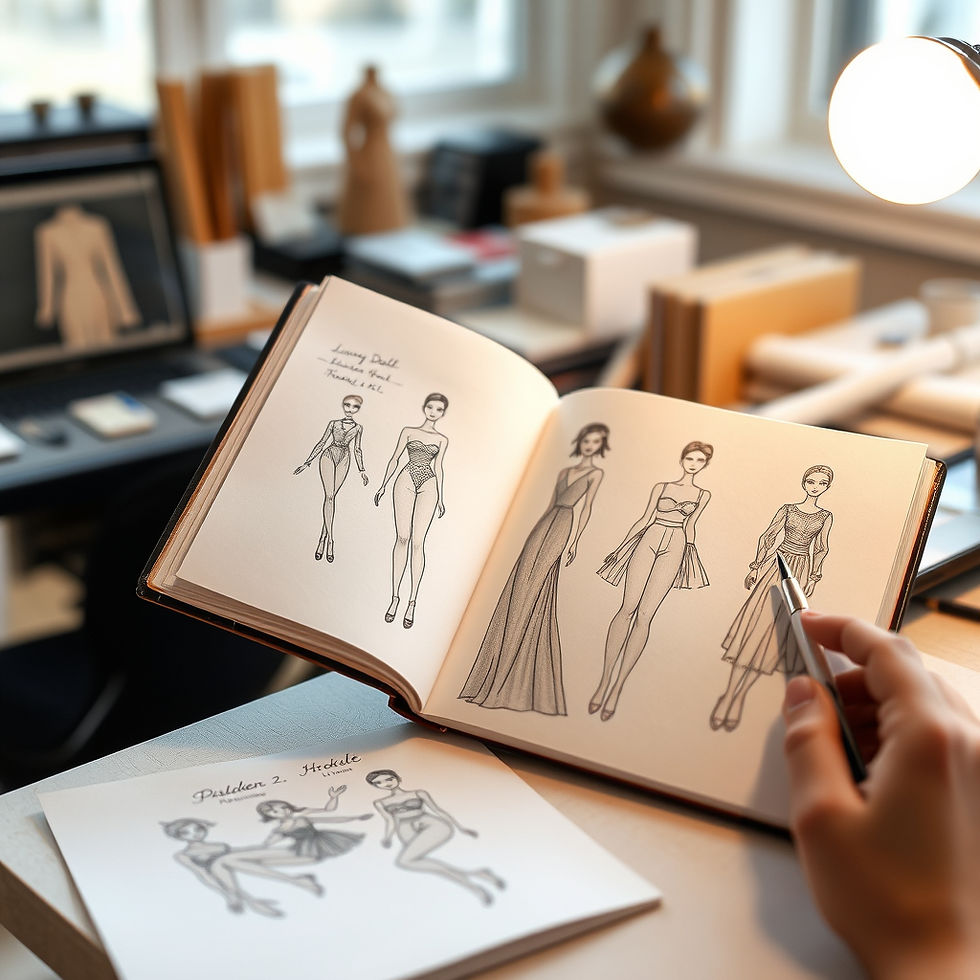
When I talk about Silkstone Barbie, I’m really talking about the only doll line that ever felt like it was made for grown women. Not “grown women who still like dolls,” but grown women who have lived, who have felt things deeply, who understand beauty as something that steadies you. There’s a seriousness to Silkstones that other dolls don’t have. A kind of emotional weight that matches the physical one. They don’t feel like childhood. They feel like womanhood — the complicated, layered, beautiful kind.
Part of it is the face. Silkstones have this expression that’s hard to describe unless you’ve held one. It’s serene, but not sweet. Elegant, but not cold. And yes — proportionally, it’s unreal. The eyes are wide, the lips are sculpted, the features are exaggerated in a way that almost shouldn’t work, but somehow it does. Some people look at them and think they’re odd. I look at them and see intention. I see a face that doesn’t apologise for being stylised. A face that feels like art, not imitation.
And then there’s the body — the eternal debate. The early non‑articulated Silkstones have this statuesque stillness to them. They stand like they’re posing for a portrait, like they’re aware of their own presence. They’re limited, yes, but the limitation becomes part of the charm. They force you to slow down, to find the angle, to appreciate the silhouette. The articulated bodies, on the other hand, bring a different kind of life. They move with a softness that makes styling feel more intimate. They bend, they gesture, they breathe a little. I love both — the stillness and the movement — because they each tell a different story.

And maybe that’s why I create fashion for them. Because Silkstones give you space to design for a woman, not a girl. Their bodies hold clothes differently. Their faces change the mood of an outfit. A gown drapes with more gravity. A coat sits with more authority. A simple dress suddenly feels like something you’d see in a boutique tucked away on a quiet London street. When I sew for them, I’m not making doll clothes. I’m building tiny wardrobes for women who exist in miniature — women who deserve couture even at eleven and a half inches tall.
Silkstones inspire me because they’re not afraid to be different. They’re not trying to be cute. They’re not trying to blend in with anything else happening in the doll world. They stand in their own lane with that sculpted face, that impossible elegance, that strange little mix of softness and strength.
That’s what keeps me coming back to them. They hold space for imagination in a way that feels grown and honest.
At the quiet end of it all
If you’ve made it this far, you already know what Silkstones do to people like us. They slow us down. They pull us in. They remind us that beauty can be quiet and still feel powerful. There’s something almost disarming about that. In a world that keeps asking us to move faster, to want more, to keep up with everything all at once, these dolls stand there with their calm faces and their impossible elegance and somehow make the noise fade for a moment.
Collectors understand this in a way that’s hard to explain to anyone else. We’re not chasing trends. We’re not trying to justify anything. We’re choosing beauty because it steadies us. We’re choosing craftsmanship because it feels good to hold something that was made with care. We’re choosing these dolls because they speak to the grown‑up parts of us — the parts that have lived through enough life to appreciate softness when we find it.
Every time you pick up a Silkstone — whether it’s a doll you’ve had for years or one you finally tracked down after searching forever — there’s that familiar moment where everything else falls away and it’s just you and her and the quiet.
So here’s to the Silkstones — the weight, the odd proportions, the elegance, the drama, the stillness, the stories. And here’s to the collectors — the ones who see all of that and feel it.
If your Silkstones mean something to you the way mine do to me, come join the club — I’d love to share the dresses I create for them, little moments of beauty we can enjoy together.
*Barbie® and all related trademarks are the property of Mattel, Inc. gtGdollwear is an independent brand and is not affiliated with or endorsed by Mattel. All original writing, photography, and doll fashions presented here are the creative work of gtGdollwear.

Comments