
Why Adults Around the World Are Gifting Themselves Dolls This Christmas
Because magic isn’t just for children — and stories aren’t bound by age.
This Christmas, thousands of adults are rediscovering dolls - not as toys, but as personal treasures that speak to something deeper. What’s behind the surge? A quiet revolution in self-gifting, where elegance, emotion, and storytelling take centre stage. These are fashion personas: miniature worlds wrapped in fabric, poetry, and mystery. Each doll invites you to reflect, collect, and reconnect with beauty, nostalgia, and meaning.
Whether you're new to adult dollwear or a seasoned collector, you're invited to explore why this movement is capturing hearts around the world...

A Global Collector Movement
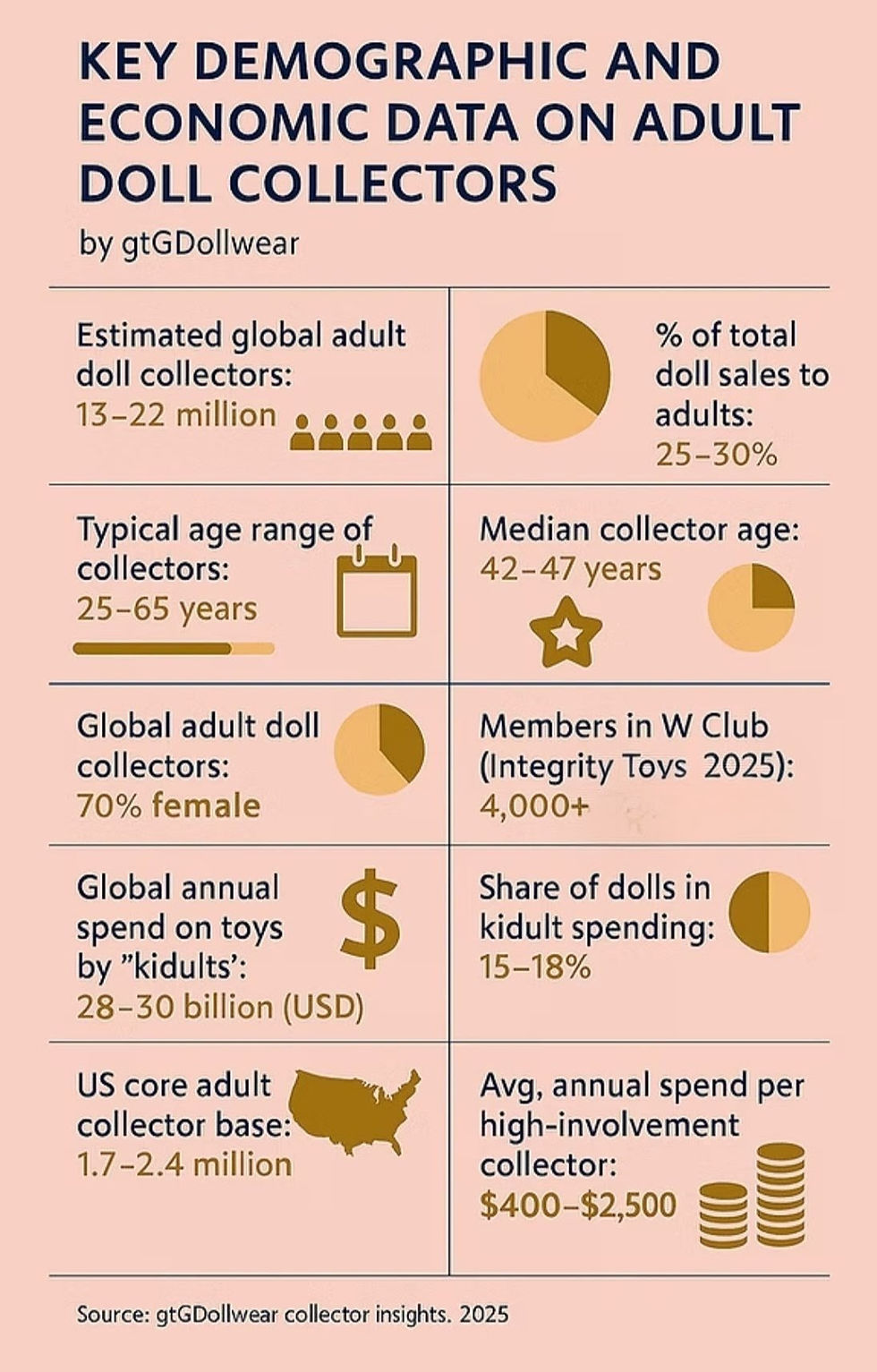
Doll collecting is no longer niche. The global collectible doll market was valued at $7.26 billion in 2023, with projections reaching $12.88 billion by 2032. The United Federation of Doll Clubs boasts over 16,000 members worldwide, while Integrity Toys’ exclusive W Club - known for its high-fashion dolls and limited releases - remains one of the most active collector communities globally.
Adult collectors span a wide age range, typically from their late 20s to 70s, with many rediscovering the hobby in their 30s and 40s. Whether drawn by artistry, storytelling, or emotional resonance, they form vibrant communities online and at conventions.
The Rise of Self-Gifting
Adults now account for 28% of global toy sales, spending billions annually on toys for themselves. In the UK alone, adult collectors spent £647(approx. €745.20)million in 2024 - nearly £1(approx. €1.15) in every £5(approx. €5.76) spent on toys. This trend, often called the “kidult” economy, reflects a growing desire for tangible joy, creative play, and personal rituals in a fast-paced world.
Collectors derive more than utility from purchases; the act of seeking, acquiring, and showcasing items delivers measurable emotional benefits. Studies in behavioural psychology link collecting behaviours to dopamine-driven reward loops, where finding rare pieces and arranging displays produces recurring satisfaction and a sense of order that helps offset everyday pressures.
The adult segment is driving higher average spends as companies create premium, collectible-grade products. Retail data show businesses increasing focus on upscale finishes, limited runs, and presentation-ready packaging because these features justify higher price points and attract repeat buyers who treat acquisitions as investments in experience and status.
Across Europe and other mature toy markets, adult-oriented lines now represent a growing slice of industry revenues. Analysts report this cohort’s steady expansion is a key contributor to overall market resilience, encouraging manufacturers to diversify ranges and extend product lifecycles through variants, reissues, and cross-category tie-ins.
Collectors increasingly view high-end dolls and bespoke doll fashion as alternative assets that combine emotional value with financial upside. Limited editions, designer collaborations, and museum-quality pieces can appreciate over time, especially when tied to strong brands or iconic designers. Provenance and scarcity drive prices in the secondary market, turning some purchases into collectible investments rather than mere playthings.
Why Do Adults Collect Dolls?
Psychologists point to several key motivations:
Nostalgia: Dolls reconnect adults with cherished memories and simpler times
Self-Expression: Customizing dolls allows collectors to explore fashion, fantasy, and identity
Emotional Regulation: Doll play can soothe anxiety, reduce stress, and offer comfort during transitions
Creativity: Designing outfits, building personas, and storytelling engage the imagination
A 2020 study by Ignacio & Cupchik found that doll collectors often use the hobby to reinforce a secure sense of self, while others find therapeutic value in creating characters that reflect their inner world.

Adults Gifting Dolls: The Mental Health Benefits of Doll Collecting Explained
Beyond aesthetics and nostalgia, doll collecting offers real psychological benefits:
Stress Relief: Physical interaction with dolls - brushing hair, dressing, posing - has calming effects
Cognitive Engagement: Sorting, customizing, and storytelling stimulate memory and creativity
Social Connection: Forums, clubs, and events foster belonging and shared passion
Purpose: Building a collection provides structure, pride, and emotional grounding
For many, dolls become more than objects - they’re companions in creativity, anchors in memory, and mirrors of personal growth.
Why Christmas? The Perfect Time for Doll Collectors
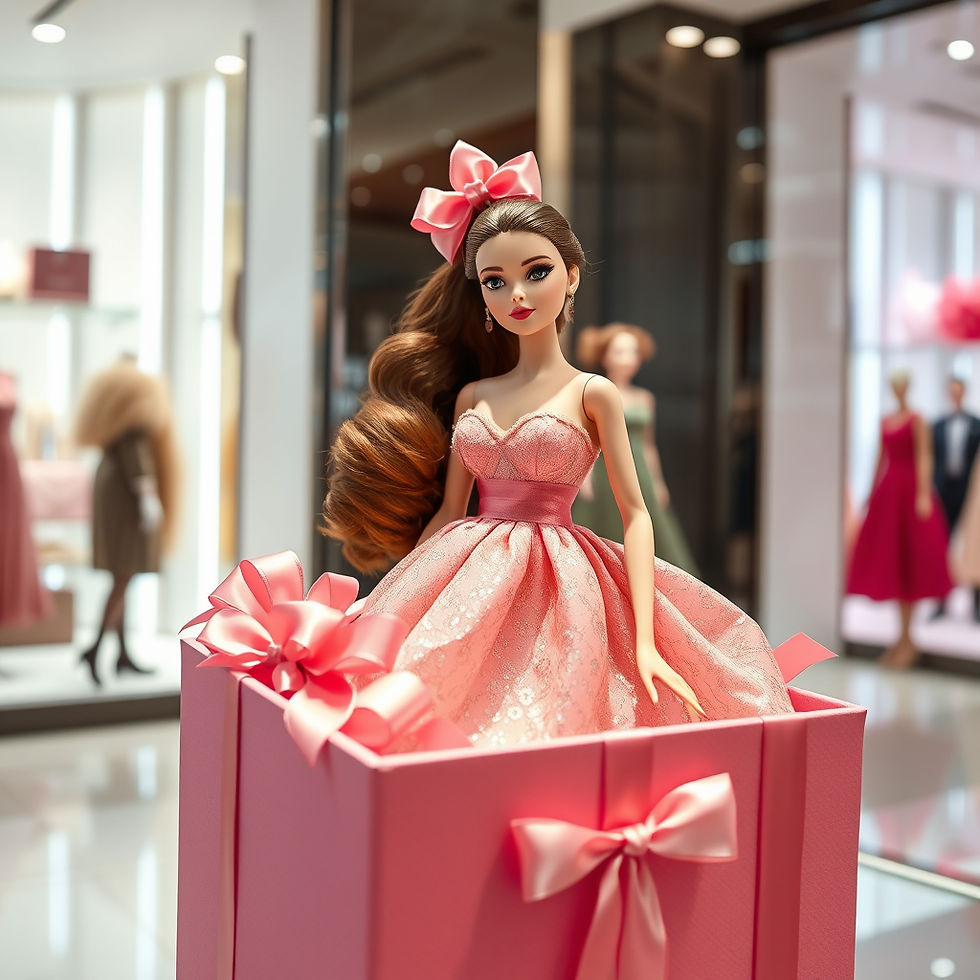
Christmas is the season when even the most disciplined collector allows a little extra sparkle, and for doll lovers that sparkle often comes wrapped in tissue and tied with ribbon. There’s something mischievously satisfying about treating yourself at this time of year: the lights are twinkling, plans are slowing down, and buying a new doll or a couture outfit feels less like indulgence and more like an essential page in your personal holiday story. A festive buy becomes an experience—a deliberate, sensory moment that starts with the thrill of the hunt and ends with the slow, glorious unwrapping that feels almost ceremonial.
Practical reasons make Christmas a smart moment to act for adults gifting dolls and doll fashion to themselves. Many doll collectors set aside a holiday budget specifically for treats, so splurges that might seem extravagant in January suddenly fit neatly into a winter plan. Retailers know this, too, and time exclusive drops, bundles, and special editions to land in the lead-up to the holidays. These seasonal releases often include unique accessories or packaging that won’t be available later, so buying at Christmas can feel like catching a comet: fleeting, beautiful, and brag-worthy. Extended return windows, gift wrapping, and priority shipping offered at this time of year reduce the usual anxiety around delicate, high-value purchases, making it easier to press the “buy” button without regret.

The social payoff is enormous and delightfully human. The holiday season is full of sharing: unboxing videos, Instagram reveals, community photo challenges, and kitchen-table show-and-tells. Presenting a new addition in a festive scene—doll-sized stockings, miniature wreaths, or a frosted-window backdrop— turns a purchase into theatre. That theatre is social currency; it prompts congratulations, swaps, and new connections with collectors who love the same quirky details you do. Even family members who normally don’t “get” the hobby tend to warm to a beautifully presented piece at Christmas, offering the rare gift of understanding and an approving smile.
There is a psychological sweet spot here, too. The end of the year invites reflection: what went well, what you want to remember, and what you want to carry into the next chapter. A doll purchased at Christmas serves as a tiny time capsule. Years later, that piece will cue a rush of memories — the scent of mulled something, the sound of carols, the slippers you wore while you unwrapped it. Buying becomes a ritual of self-recognition, a quiet way of honoring a year survived and a year to come. For many collectors, such purchases are a form of self-care: intentional, tactile, and deeply personal in a way that scrolling and streaming rarely are.
Curatorial joy fuels more than just the purchase; it fuels display. Holiday-themed mantel displays, table centrepieces, or window scenes — turn solitary objects into narratives. A Christmas acquisition instantly elevates the entire display. Suddenly the collection isn’t a row of items but a miniature world with stories, seasons, and recurring characters. The desire to create those scenes also nudges collectors to buy complementary items — an extra coat here, a pair of boots there — so one small purchase can multiply the fun and visual payoff exponentially.
Markets behave in conveniently festive ways, too. The weeks surrounding Christmas produce higher activity in both primary and secondary markets: collectors make room for new pieces, sellers list to capitalise on visibility, and liquidity improves. That makes it a reasonable time to find good deals, trade strategically, or flip a piece to fund another. Limited holiday releases often become especially sought-after because they’re tied to a moment — both aesthetically and historically — making them appealing to future buyers. In short, the season can be an economically smart time as well as an emotionally satisfying one.
The communal aspect of the holidays — gifting, swapping, and celebrating — lowers the internal friction that sometimes stops collectors from buying for themselves. The cultural permission to treat oneself is loud and clear in December; the act of buying feels socially sanctioned rather than selfish. That matters. When the world is telling you that small pleasures are part of celebration, it’s easier to justify splurges that feel nourishing rather than wasteful. Collectors often report that a Christmas purchase brings more joy precisely because it is framed as a ritual gift: it’s both a present and a promise to oneself.
Finally, the longer-term narrative reward should not be underestimated. Objects acquired at Christmas often take on a special place in the collector’s story. They become triggers for retelling memories and markers of personal history. In the future, telling the story of “the Christmas I finally bought that doll” is not just nostalgia — it’s a way to weave your collection into the fabric of your life.
All of this adds up to a persuasive, slightly indulgent argument: Christmas is a brilliantly timed excuse to treat yourself. It’s when budgets, market opportunities, social connection, and emotional appetite all line up. For doll collectors, that alignment turns a purchase into an event — a small, joyful ritual that rewards both the heart and the eye. So go ahead: if the season calls for a little extra sparkle on your shelf, make the doll you choose this Christmas a story you’ll want to tell again and again.

Comments